
In today’s fast-evolving construction industry, the materials used to build a home play a crucial role in determining its strength, durability, safety, and lifespan. Traditional materials are now being replaced or upgraded with advanced construction solutions that offer better performance, sustainability, and cost efficiency.
This guide explores the most effective modern construction materials that help create strong, weather-resistant, and long-lasting homes.
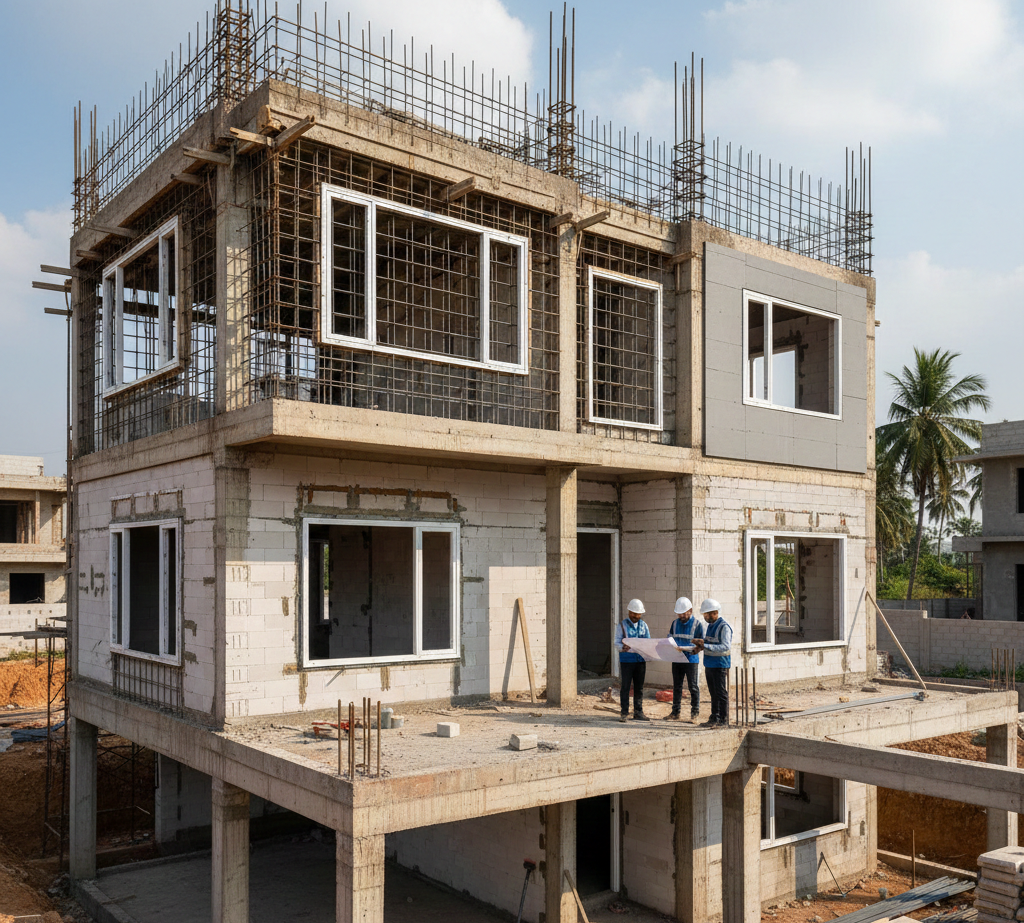
Why Choosing the Right Construction Material Matters
The quality of construction materials directly impacts:
-
Structural strength & load-bearing capacity
-
Resistance to weather, moisture, and termites
-
Long-term maintenance cost
-
Energy efficiency & indoor comfort
-
Overall property value
Using modern materials ensures your home remains safe, efficient, and future-ready for decades.
1. High-Strength Concrete (HSC)
High-Strength Concrete is an improved version of traditional concrete with superior compressive strength and durability.
Key Benefits:
-
Higher load-bearing capacity
-
Longer lifespan with minimal cracks
-
Better resistance to environmental damage
Best Used For:
Foundations, columns, beams, and slabs
2. Reinforced Steel & TMT Bars
Modern TMT (Thermo-Mechanically Treated) steel bars are essential for earthquake-resistant and long-lasting structures.
Advantages:
-
Excellent tensile strength
-
High flexibility during seismic movement
-
Corrosion and fire resistance
Why It’s Important:
Steel reinforcement gives concrete the strength it lacks on its own.
3. AAC (Autoclaved Aerated Concrete) Blocks
AAC blocks are lightweight, eco-friendly, and highly durable, making them a smart alternative to traditional bricks.
Key Features:
-
Reduces structural load
-
Excellent thermal insulation
-
Faster construction with less material waste
Ideal For:
Walls in residential and commercial buildings
4. Fly Ash Bricks
Fly ash bricks are made from industrial waste and offer high strength and uniform shape.
Benefits:
-
High compressive strength
-
Smooth finish reduces plaster cost
-
Environmentally sustainable
Long-Term Advantage:
Lower water absorption means fewer cracks and better durability.
5. Fiber Cement Boards
These boards are widely used for modern wall cladding, partitions, and ceilings.
Why Builders Prefer Them:
-
Fire, moisture, and termite resistant
-
Lightweight yet strong
-
Long lifespan with minimal maintenance
Perfect For:
Exterior facades and interior partitions
6. Engineered Wood & Laminated Panels
Modern engineered wood products are stronger and more stable than natural wood.
Advantages:
-
Resistant to warping and moisture
-
Eco-friendly and cost-effective
-
Long-lasting finish
Common Applications:
Doors, cabinets, wall panels, and furniture
7. Waterproofing & Chemical Admixtures
Modern construction relies heavily on chemical solutions to protect structures.
Types Include:
-
Integral waterproofing compounds
-
Crack-resistant admixtures
-
Anti-corrosion chemicals
Why They Matter:
They prevent leakage, dampness, and structural damage over time.
8. UPVC & Aluminum Window Systems
Traditional wooden windows are being replaced by modern UPVC and aluminum frames.
Key Benefits:
-
Rust-free and weather resistant
-
Better sound and heat insulation
-
Long-lasting with zero maintenance
Result:
Improved comfort, energy efficiency, and durability.
9. Sustainable & Green Materials
Modern homes are shifting toward eco-friendly construction materials that reduce environmental impact.
Popular Options:
-
Recycled steel
-
Solar-reflective roofing materials
-
Low-VOC paints and finishes
Long-Term Value:
Lower energy bills and a healthier living environment.
Final Thoughts
Modern construction materials are transforming the way homes are built today. By choosing advanced, high-quality materials, homeowners can ensure greater strength, durability, safety, and long-term savings.
A well-constructed home using modern materials is not just a structure—it’s a long-term investment in comfort and peace of mind.