
Building a home is more than just laying bricks—it’s about turning a vision into a safe, functional, and lasting space. Understanding the home construction process step by step helps homeowners avoid costly mistakes, manage timelines, and make informed decisions. Here’s a complete breakdown of the journey from the first idea to finally receiving the keys to your home.
1. Vision, Planning & Budgeting
Every successful home begins with a clear plan. This stage focuses on defining your needs, lifestyle preferences, plot size, and future requirements.
Key activities include:
-
Finalizing the number of rooms and layout
-
Setting a realistic budget (construction + interiors + contingency)
-
Understanding local building rules and approvals
-
Shortlisting a construction partner or architect
A strong plan saves time, money, and stress later in the project.
2. Architectural Design & Structural Drawings
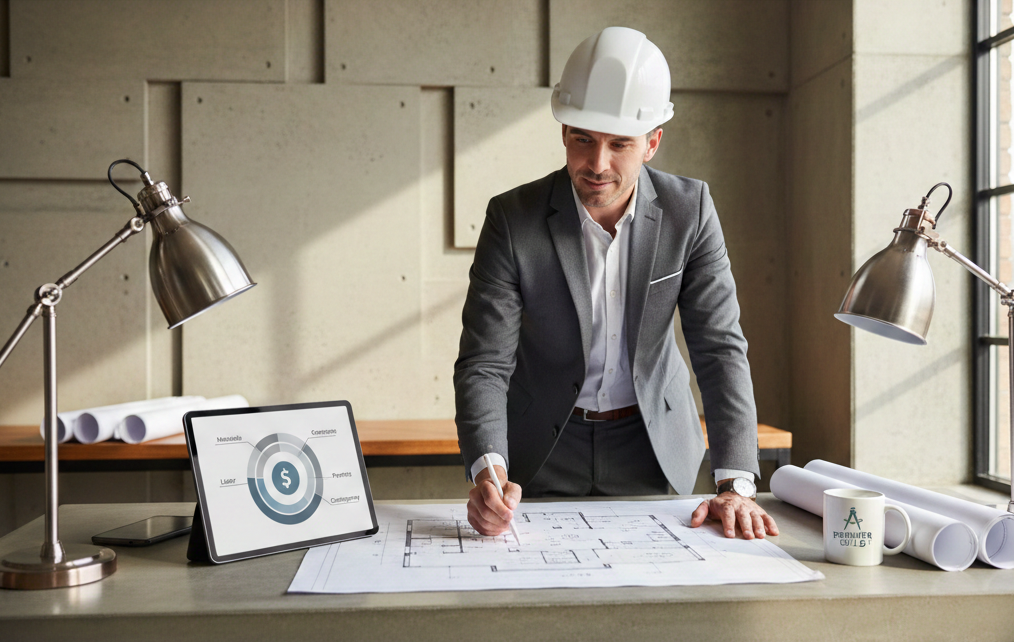
Once planning is done, professionals transform your ideas into technical drawings.
This includes:
-
Floor plans and 3D elevations
-
Structural design for safety and load-bearing
-
Electrical, plumbing, and ventilation layouts
Good design ensures proper space utilization, natural light, airflow, and long-term durability.
3. Legal Approvals & Documentation
Before construction begins, all legal permissions must be secured.
Common approvals include:
-
Municipal building approval
-
Environmental or zoning clearance (if required)
-
Water and electricity permissions
Starting construction without approvals can lead to penalties or project delays, so this step is critical.
4. Site Preparation & Foundation Work
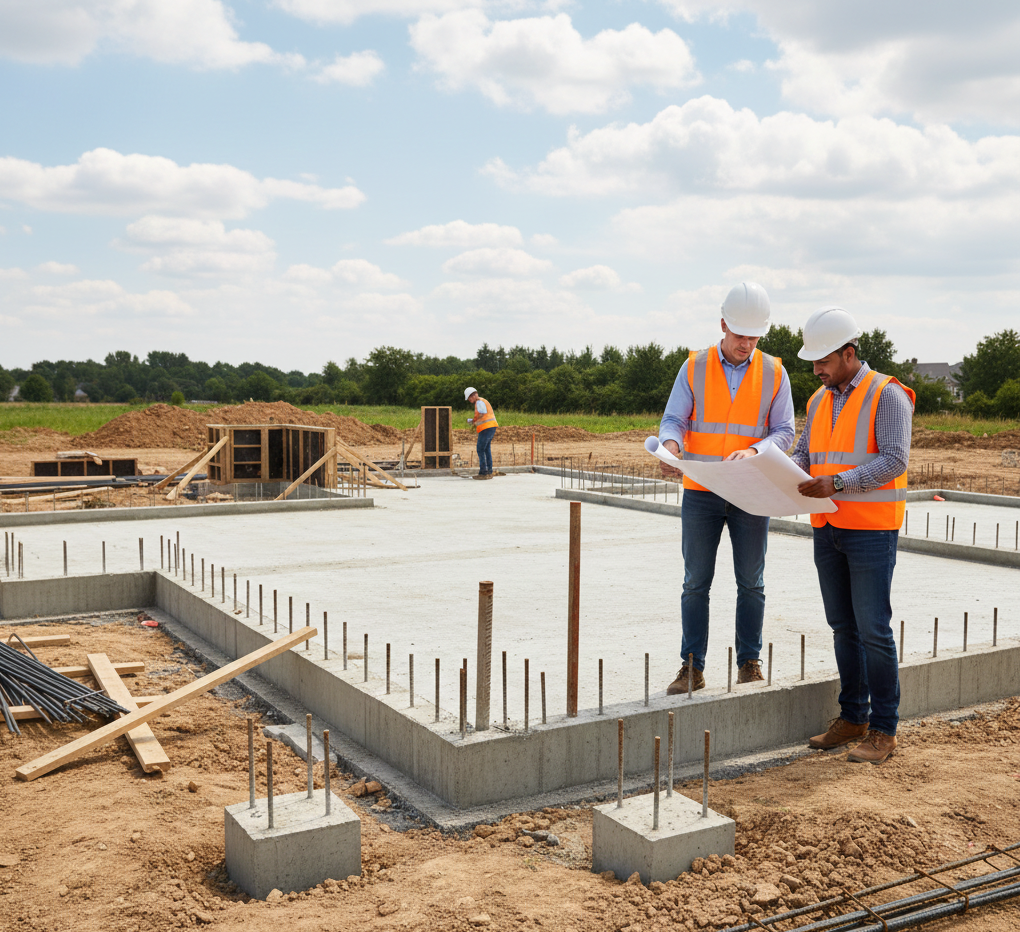
The actual construction starts on-site.
This phase covers:
-
Land cleaning and leveling
-
Soil testing
-
Excavation and foundation laying
A strong foundation is the backbone of your home—it determines structural stability and longevity.
5. Structural Construction (Grey Structure)
This is the most visible phase of construction.
It includes:
-
Columns, beams, and slabs
-
Brickwork for walls
-
Staircase construction
-
Roof slab casting
At this stage, your home begins to take shape physically.
6. Plumbing, Electrical & MEP Installations
Before plastering, internal systems are installed.
This includes:
-
Concealed electrical wiring
-
Plumbing and drainage lines
-
Provision for internet, AC, and security systems
Proper planning here avoids future wall-breaking and maintenance issues.
7. Plastering, Flooring & Finishing Works
This stage brings refinement and aesthetics.
Work includes:
-
Wall plastering and putty
-
Flooring installation (tiles, marble, or wood)
-
False ceilings and wall finishes
-
Kitchen platform and bathroom fittings
Your house now starts to feel like a home.
8. Interior & Exterior Enhancements
Design elements are added to enhance comfort and style.
This includes:
-
Modular kitchen and wardrobes
-
Lighting fixtures and switches
-
Exterior painting and elevation detailing
-
Landscaping or compound wall work
This phase reflects your personal taste and lifestyle.
9. Quality Checks & Final Inspections
Before possession, the entire house is inspected for:
-
Structural safety
-
Plumbing and electrical functionality
-
Finish quality and alignment
-
Compliance with approved plans
Any defects are corrected to ensure a flawless handover.
10. Handover & Possession
The final step is the most exciting one.
You receive:
-
Completion certificate
-
Warranty documents
-
Final drawings and manuals
-
Keys to your new home 🎉
Your dream home is now ready to be lived in.
Final Thoughts
Understanding the step-by-step home construction process empowers homeowners to stay confident and informed throughout the journey. With proper planning, expert execution, and quality control, building a home becomes a smooth and rewarding experience.
Choosing the right construction partner ensures that your dream home is built on trust, transparency, and long-term value.